
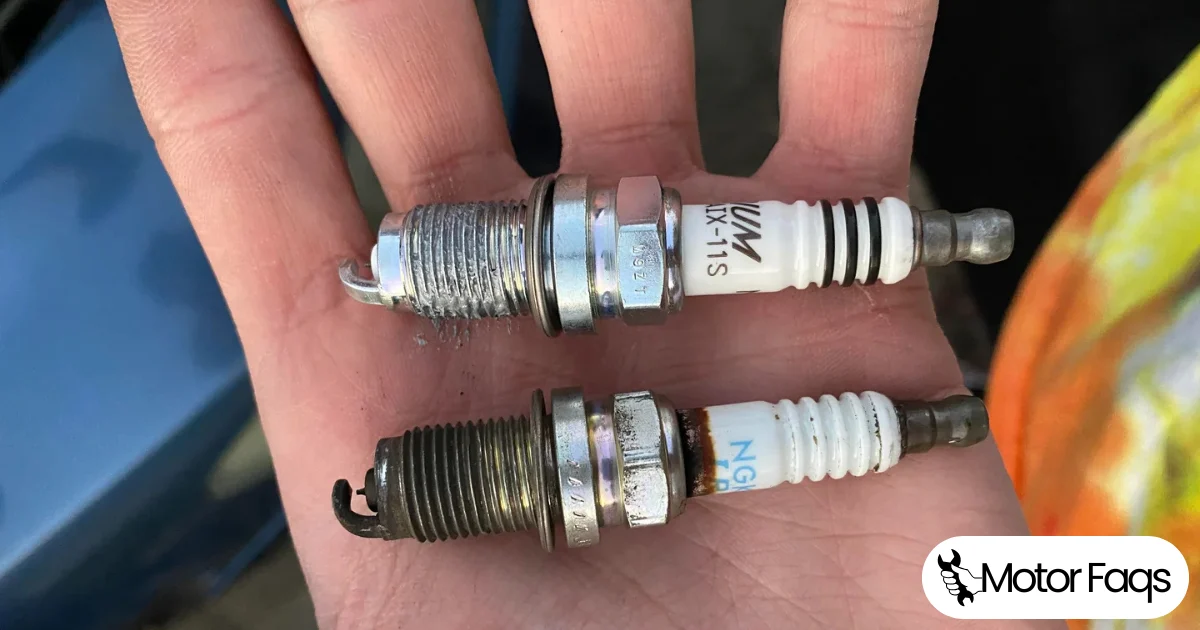
Why Your New Spark Plug Might Be Junk
Like a phone charger that doesn’t work straight out of the package, spark plugs can have manufacturing flaws. Sometimes the ceramic insulator cracks during shipping, or the electrode gap is set wrong. I’ve seen students install new plugs only to find the engine runs worse than before.
Another common issue? Installing a plug designed for a different engine. Always cross-check part numbers. If you’re unsure, compare thread size and reach length to the old plug. A mismatch can cause compression loss or pre-ignition.
- Manufacturing defect: Cracked insulator, bent electrode, or incorrect gap.
- Damage during install: Cross-threading, over-tightening, or dropping the plug.
- Wrong part: Incorrect heat range or physical dimensions for your engine.
Before installing, lay the plug on a flat surface and roll it. Listen for wobbling—that’s a sign of a bent electrode. Use a gap tool to check spacing; most plugs come pre-gapped but it’s worth verifying. If you’re in doubt, test-fire the plug against a grounded bolt. You should see a sharp blue spark.